Exploring AI’s Role in Creative Industries Today
1. Introduction to AI in Creative Industries
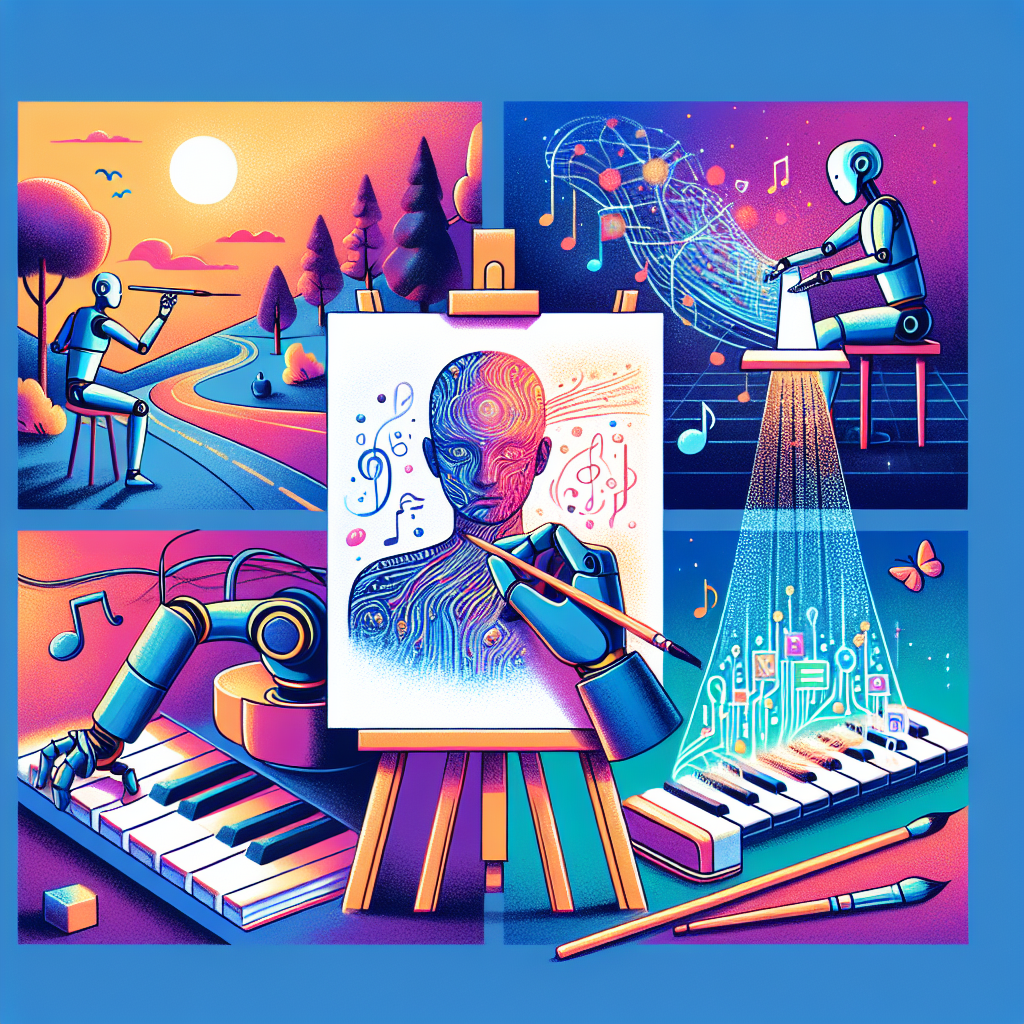
Artificial Intelligence (AI) has rapidly become a game-changer in many sectors, and the creative industries are no exception. From producing artwork to composing music and generating written content, AI is redefining the boundaries of creativity and collaboration. According to a recent McKinsey report, up to 60% of jobs in creative fields could be impacted by AI in the next decade, making it essential to understand how these technologies are reshaping artistic expression and production.
2. AI-Generated Art
AI art has gained significant traction over the past few years, leading to an intriguing blend of human and machine creativity. Programs like DALL-E, developed by OpenAI, and other neural networks can create original artwork based on text prompts. Notably, a piece created by AI artist Rob McCallum sold for $350,000 at auction, showcasing a market for AI-generated art.
Furthermore, artists are collaborating with AI algorithms to create hybrid artworks that merge human instincts with computational precision. Research indicates that artworks produced with AI involvement have gained attention, with approximately 25% of gallery owners acknowledging AI-generated pieces in their collections.
3. Transforming the Music Industry
AI’s influence in music is both profound and multifaceted. Tools such as Amper Music and AIVA (Artificial Intelligence Virtual Artist) allow users to generate complete music tracks, catering to various genres and moods. By analyzing patterns, structures, and historical data on existing songs, these AI systems can compose original pieces that are indistinguishable from human-created music.
The use of AI in music is not limited to composition. AI-driven analytics help music producers identify trends, predict the next big hit, and personalize playlists based on listener preferences. As of 2022, around 60% of music streaming services utilized AI technology to enhance user experience and engagement.
4. AI in Writing
The writing domain is undergoing a seismic shift due to AI technologies like GPT-3 and ChatGPT, which can generate coherent text, draft articles, and even produce poetry. These AI models analyze vast databases of text, allowing them to simulate human-like writing styles.
Currently, AI writing tools are used by more than 30% of businesses to create content ranging from social media posts to detailed reports. However, challenges remain regarding originality and quality, as companies must ensure that AI-generated content aligns with their brand voice and values.
5. Ethical Considerations
As AI increasingly permeates creative industries, ethical dilemmas arise around authorship, originality, and the potential for job displacement. For instance, if an AI generates a piece of art, who owns the rights? The creator of the algorithm, the user, or the AI itself? These questions are not merely academic; they have real implications for artists, musicians, and writers.
According to surveys, nearly 55% of creators express concern about AI potentially taking over their roles. In contrast, many believe that collaboration with AI can enhance creativity rather than replace it. The key is to establish ethical frameworks that acknowledge human creativity while embracing technological advancements.
6. The Human-AI Collaboration Trend
Rather than viewing AI as a competitor, many artists and creators are leveraging AI as a collaborative tool. For example, musicians are using AI to generate backing tracks, suggesting melodies, or even mixing sounds in ways they might not have envisioned. This partnership can lead to innovative artistic expressions that blend the strengths of both human intuition and machine efficiency.
A survey showed that 70% of creatives believe that working alongside AI enhances their creative process. In this collaborative space, both parties can push each other to new heights, leading to unexpected outcomes that challenge traditional notions of art and creativity.
7. The Future of AI in Creativity
Looking ahead, the trajectory of AI in creative industries seems promising. As AI technologies continue to evolve, we can expect even more sophisticated tools that help creators streamline their workflows and enhance their artistic output. The integration of AI with virtual reality and augmented reality could also open up new avenues for immersive experiences in art and music.
Statistically, the market for AI in creative industries is projected to grow at a compound annual growth rate (CAGR) of over 40% from 2022 to 2027. Major tech companies are investing heavily in AI solutions for creative applications, indicating a strong potential for future growth and innovation.
8. Conclusion
AI’s role in the creative industries today is a double-edged sword, offering both opportunities and challenges. From generating captivating art to composing music and drafting engaging content, AI is proving to be a significant innovation catalyst. The key lies in collaboration. By embracing AI as a creative partner rather than a competitor, creators can unlock new forms of expression and creativity that could redefine the future of art, music, and writing. To navigate this evolving landscape successfully, industry stakeholders must remain vigilant about ethics, authorship, and the authentic representation of human creativity in the digital age.

Post Comment